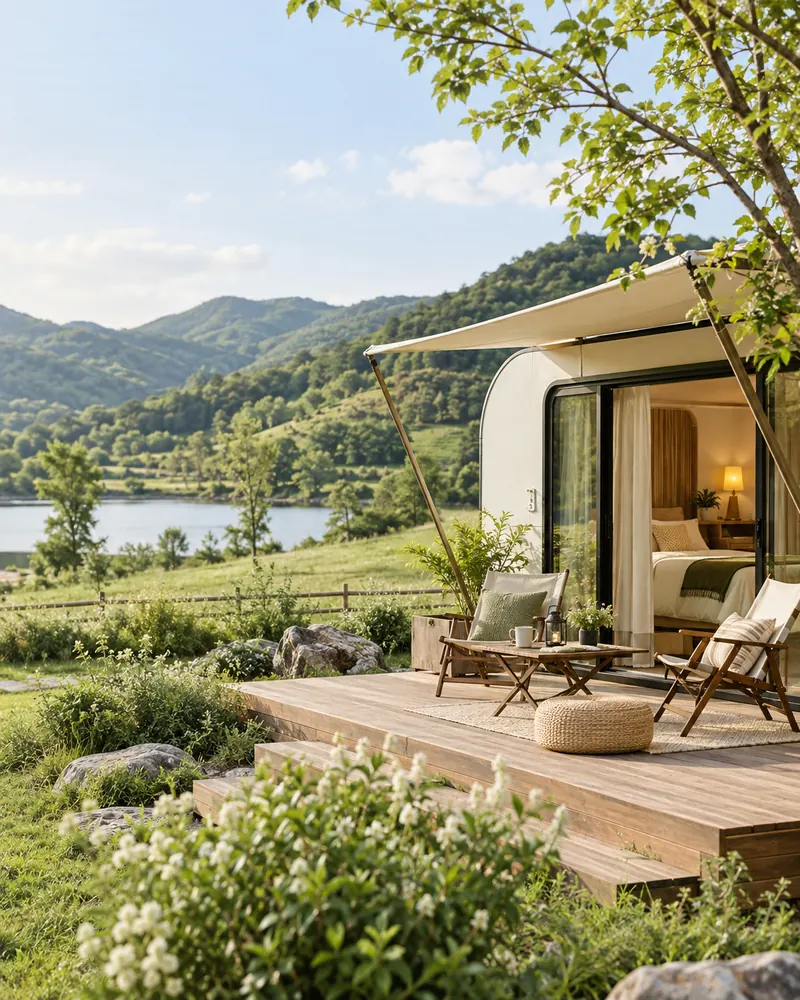
FIRST CAMPING CHOICE
Tent camping, glamping or an on-site caravan: what is the difference?
Choosing where you will sleep makes packing for your first trip simpler. This is a general comparison: check the official listing for your exact pitch or accommodation for provided items, facilities, cooking and fire rules.
| Category | Your own tent | Glamping | On-site caravan |
|---|---|---|---|
| What to bring | Bring a tent, sleeping pads, bedding and cooking equipment as needed. | Start with clothes, toiletries, personal medicines and snacks. | Start with clothes, toiletries, personal medicines and snacks. |
| Before booking | Check pitch size, vehicle access, electricity, distance to sinks and toilets, and fire rules. | Check bedding, towels, dishes, heating and cooling, barbecue equipment and shared facilities. | Check bed size, bathroom and cooking facilities, heating and cooling, parking and vehicle rules. |
| Setup and packing up | Setup time depends on your experience. Practise pitching the tent before you leave. | Unpack and check what is provided, as well as the rules for damage or stains. | Unpack and check what is provided. Read the cooking, wastewater and rubbish rules. |
| Weather considerations | Rain, wind and ground conditions can have a major effect. Follow weather alerts and campsite restrictions. | A fixed structure reduces the gear you need, but check for closures and whether outdoor barbecues are permitted. | Even with indoor space, wind and rain can affect travel and outdoor activities. |
| Sleeping and hygiene | Toilets and showers are often shared, so check how far they are from your pitch. | Bathrooms may be private or shared. Check the bathroom and bedding included with your accommodation. | A private bathroom may be available; check the specific unit and its upkeep rules. |
| For a first trip | Try renting gear or joining someone on a trip before deciding what to buy. | Consider this if you want less setup or are camping with a child for the first time. | Compare the unit details if indoor comfort and a private space matter most to you. |
Compare at a glance
Key comparisons to look at first
| Check Topic | key judgment | Other points to consider |
|---|---|---|
| Preparation begins at the reserved area. | What you need depends on whether you are bringing a tent or staying in an on-site caravan, even at the same campsite. | — |
| Essential · Sleep and basic life | If you are pitching your own tent, bring all tent parts, stakes suited to the ground, a sleeping pad and a sleeping bag suited to the season. | Sleeping: tent or reserved accommodation, mat/bedding, necessary anchorage equipment · What to wear: Layers of clothing to suit changes in temperature, extra socks/clothes, outerwear to prepare for rain. |
| Required · Prepare only enough food and keep it cold. | Simple meals make a first trip easier to prepare for and clean up after. | Korea’s Ministry of Food and Drug Safety advises keeping food cold in a cooler with ice packs and separating raw meat from other ingredients. |
| It's okay to rent a tent first. | Check whether you can rent bulky equipment such as a tent, table, chairs, sleeping pads and sleeping bags. | When you receive rented gear, check the parts and instructions and practise setting it up. |
| Choice · You don’t have to buy everything from the beginning. | Optional items such as decorative lights, extra cookware, large storage units and a large tarp can wait until you know what you need. | Putting off a purchase is different from skipping safety preparations. |
| Lay out your gear before you leave | Small setup parts and bags for packing up are easy to forget. | Have you double-checked the provided/rental items in the reserved area? · Are the tent parts, lantern batteries, and bedding quantities correct? |
Choose an item from the table that is closest to your situation, then check the explanation and official source below.
Preparation begins at the reserved area.
What you need depends on whether you are bringing a tent or staying in an on-site caravan, even at the same campsite. Check what your booked accommodation provides, then decide what to bring or rent. Use this list as a starting point for one night and adjust it for the season, group size and equipment instructions.
Essential · Sleep and basic life
If you are pitching your own tent, bring all tent parts, stakes suited to the ground, a sleeping pad and a sleeping bag suited to the season. For furnished accommodation, check how much bedding is provided and whether extra guests need their own.
Sleeping: tent or reserved accommodation, mat/bedding, necessary anchorage equipment
What to wear: Layers of clothing to suit changes in temperature, extra socks/clothes, outerwear to prepare for rain.
Movement/Contact: Lantern, charger/auxiliary battery, reservation details, campsite address and emergency contact information
Hygiene and organization: Towels, toiletries, tissues, bags to share trash and wet items
Personal preparation: commonly used medications, first aid supplies, and necessary personal hygiene items.
Required · Prepare only enough food and keep it cold.
Simple meals make a first trip easier to prepare for and clean up after. Pack drinking water, dishes, necessary cooking tools and ingredients that need to stay cold separately. A campsite shop may not stock everything you want.
Korea’s Ministry of Food and Drug Safety advises keeping food cold in a cooler with ice packs and separating raw meat from other ingredients. Use separate utensils for raw meat and ready-to-eat foods. Do not use stream water for drinking or as a substitute for refrigeration.
It's okay to rent a tent first.
Check whether you can rent bulky equipment such as a tent, table, chairs, sleeping pads and sleeping bags. Even where rentals are offered, confirm availability, advance reservations, fees and return conditions. Do not assume equipment will be available on arrival.
When you receive rented gear, check the parts and instructions and practise setting it up. Check the campsite’s electrical limits and rules before using electrical equipment. Avoid damaged cables and connections that overload circuits.
Choice · You don’t have to buy everything from the beginning.
Optional items such as decorative lights, extra cookware, large storage units and a large tarp can wait until you know what you need. After your first trip, note what you missed and what you did not use.
Putting off a purchase is different from skipping safety preparations. Never use a fire pit or stove inside a tent. Locate the carbon monoxide alarm and fire extinguisher; an alarm does not make unsafe use of a flame safe.
Lay out your gear before you leave
Small setup parts and bags for packing up are easy to forget. Pack in the order you will use things, and dry wet gear before storing it at home.
Have you double-checked the provided/rental items in the reserved area?
Are the tent parts, lantern batteries, and bedding quantities correct?
Do you have thermal insulation and waterproofing prepared according to the weather forecast?
Can the ingredients be kept cold and stored separately?
Does anyone know how to set it up and where to take shelter?
How to choose camping gear
See what to check when choosing tents, bedding and cookware.
Explore camping gear and product guidesWhat materials did you refer to?
Source and confirmation date
The preparation order and selection method are in Cheotcamp editing guide. We referenced the publicly available data from the organizations, operators, and professional companies below. This is not a review of an on-site visit. General overseas advice or individual operator rules do not apply equally to all camping sites in Korea. The date of confirmation of the source is different from the date of confirmation of current operation and reservation availability.
- National Fire Agency · Spring camping essentials and safety rules (2025.04.28)Source checked 2026.10.04 · Basic supplies, Night movement and warmth
- Ministry of Food and Drug Safety · Food poisoning prevention rules for outdoor activities in summer (2025.07.18)Source checked 2026.10.04 · Transportation and storage of food ingredients, Cross-contamination prevention
- Fire Department · Camping site safety rules (2026.09.04)Source checked 2026.10.04 · Fire/electrical safety, Children and emergency evacuation
- Korea Tourism Organization Go Camping · Solseom Auto Camping SiteSource checked 2026.10.03 · Equipment rental information example
FAQ
Frequently asked questions when first preparing
Q. What should I check first when packing for my first camping trip?
What you need depends on whether you are bringing a tent or staying in an on-site caravan, even at the same campsite. Check what your booked accommodation provides, then decide what to bring or rent. Use this list as a starting point for one night and adjust it for the season, group size and equipment instructions.
Q. What sleeping gear do I need for tent camping?
If you are pitching your own tent, bring all tent parts, stakes suited to the ground, a sleeping pad and a sleeping bag suited to the season. For furnished accommodation, check how much bedding is provided and whether extra guests need their own.
Q. How should I prepare food and cooking equipment for camping?
Simple meals make a first trip easier to prepare for and clean up after. Pack drinking water, dishes, necessary cooking tools and ingredients that need to stay cold separately. A campsite shop may not stock everything you want.